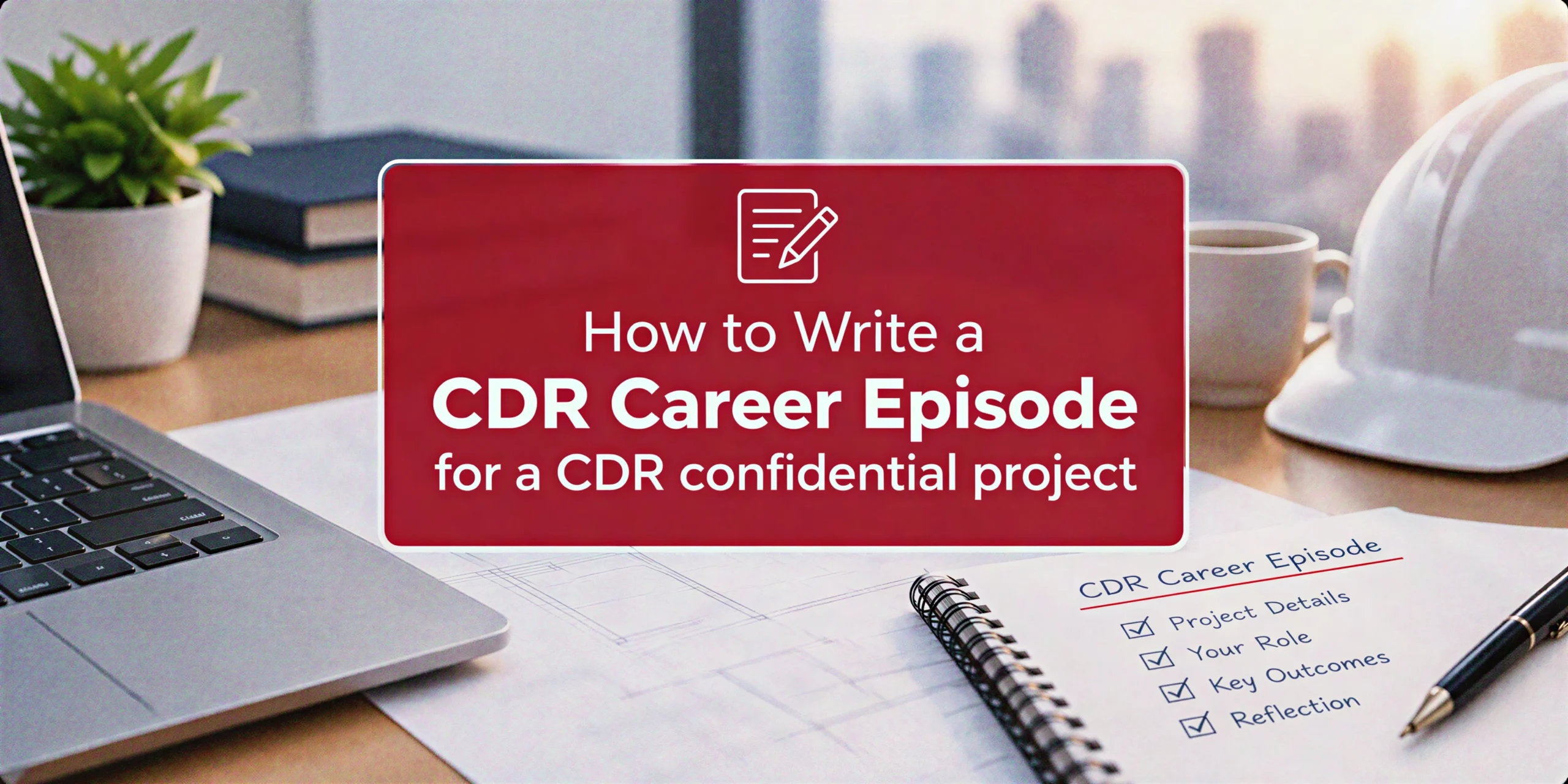

The Ultimate Guide to Writing a Winning Career Episode for Engineers Australia
Migrating to Australia as a qualified engineer is a life-changing career milestone. However, navigating the assessment process set by Engineers Australia requires a detailed demonstration of your technical capabilities, problem-solving skills, and professional journey.
At the heart of the Migration Skills Assessment (MSA) lies the Competency Demonstration Report (CDR). Within that report, the most critical element is drafting three comprehensive career episodes.
Writing a career episode for Engineers Australia can be daunting. It demands strict adherence to official guidelines, precise technical language, structural numbering, and an unwavering focus on your personal engineering contributions.
Whether you are drafting your reports independently or seeking professional career episode report assistance through specialized providers like
CDR Report Writers, this ultimate guide covers everything you need to know about crafting compelling career episode reports that yield a positive assessment.
What is a Career Episode?
A career episode is an essay-form technical account detailing specific periods of your engineering education or work experience. Its primary function is to demonstrate how you applied your engineering knowledge and skills to solve complex problems, manage projects, and deliver technical solutions within your chosen discipline.
Under the Engineers Australia Migration Skills Assessment rules, every applicant submitting a Competency Demonstration Report must present three distinct career episode reports. Each career episode must focus on a different project or distinct phase of your engineering activity.
Key Objectives of a Career Episode for Engineers Australia
Engineers Australia assessors do not evaluate your former employer’s profile or your team’s collective reputation. They evaluate you.
When preparing your career episode for Engineers Australia, your write-up must achieve the following core objectives:
- ✓Highlight Personal Involvement: Showcase your exact role, personal decisions, calculations, and actions using first-person active voice (“I designed”, “I calculated”, “I investigated”).
- ✓Demonstrate Stage 1 Competencies: Map your actions directly to the Stage 1 Competencies defined for your occupational category (Professional Engineer, Engineering Technologist, Engineering Associate, or Engineering Manager).
- ✓Evidence Technical Expertise: Detail how you identified problems, applied engineering theories, adhered to industry standards, and utilized specialized tools or software.
- ✓Maintain Structural Integrity: Write in Australian English using clear, professional narrative sections, numbered chronologically.
Selecting Projects for Your Career Episode Reports
Choosing the right project is half the battle won. A weak project limits your ability to demonstrate advanced engineering skills. When selecting experiences for your career episode reports, draw from:
- Engineering Work Projects: Significant professional assignments from current or past employment where you tackled complex engineering problems.
- Academic Major Projects: Final-year undergraduate or postgraduate research projects, theses, or design tasks (ideal for fresh graduates).
- Innovations & System Overhauls: Specific instances where you redesigned a system, introduced a process improvement, or engineered a structural solution.
- Position of Leadership/Responsibility: Projects where you managed technical teams, ensured site safety, or coordinated multidisciplinary engineering tasks.
Required Structure of a Career Episode for Engineers Australia
Engineers Australia enforces a standardized four-part structure for every career episode report. Each career episode must range between 1,500 and 2,500 words.
Every paragraph within your career episode must be distinctly numbered (e.g., Episode 1 uses paragraphs 1.1, 1.2, 1.3; Episode 2 uses 2.1, 2.2, etc.) to allow smooth cross-referencing in your Summary Statement.
1. Introduction (~100 words)
The Introduction sets the chronological context of the career episode. Include:
- Dates and duration of the project
- Location of the project (city, country)
- Name of the employing organization or educational institution
- Title of the position you held during this period
2. Background (~200 to 500 words)
The background includes:
- Overall nature and objectives of the engineering project
- Nature of your specific work area
- An official Organogram (Organization Chart) highlighting your position within the project structure
- A summary of your primary duty statement or job responsibilities
3. Personal Engineering Activity (~500 to 1,000+ words)
This is the heart of your career episode for Engineers Australia. Focus entirely on personal contributions:
- How you applied engineering knowledge and technical skills
- Specific technical challenges encountered and solved
- Calculations, designs, software modeling, or simulation tools used
- Project coordination, teamwork, and adherence to safety and environmental codes
4. Summary (~50 to 100 words)
The Summary wraps up the career episode report. Include:
- Overall assessment of whether the project met engineering goals
- How your personal efforts contributed to overall success
- Highlights of how the episode validated your engineering competencies
Comparing Quality Levels in Career Episode Reports
To better understand what Engineers Australia expects, consider the differences between weak, acceptable, and exemplary writing in a career episode:
Step-by-Step Writing Process for Your Career Episode

To draft a professional career episode for Engineers Australia, follow this sequential workflow:
1
2
3
4
5
6
- Collect Documentation: Gather structural drawings, design calculations, project schedules, and progress reports before writing.
- Identify Competency Indicators: Review the MSA Booklet to ensure your narrative hits the necessary knowledge base, engineering application, and professional attribute indicators.
- Draft the Narrative in Active Voice: Use simple, direct, active sentences focusing on your personal engineering tasks.
- Format with Precise Paragraph Numbering: Format every section into numbered paragraphs for effortless indexing in your Summary Statement.
- Conduct a Thorough Audit: Check for grammar, tone, technical accuracy, and zero plagiarism.
Common Pitfalls to Avoid in Career Episode Reports
Assessing authorities routinely reject or request heavy revisions on career episode reports due to avoidable mistakes. Protect your application by avoiding these common errors:
- Overusing Team-Oriented Language: Avoid using phrases like “we developed,” “our team managed,” or “the company executed.” Always state what you calculated, designed, or executed.
- Plagiarism and AI-Generated Templates: EA uses advanced detection tools to check every career episode against global databases. Copying a sample or using unedited AI output can lead to a 12- to 36-month ban from applying.
- Focusing Excessive Space on Project Description: The Background section should set the stage, not dominate the essay. Keep it concise so your Personal Engineering Activity section retains maximum focus.
- Excessive Jargon Without Engineering Context: Listing software tools (e.g., AutoCAD, MATLAB, ANSYS) without explaining how you used them to solve a technical problem weakens your narrative.
- Ignoring Engineering Standards: Australian assessors expect engineers to follow established codes (e.g., AS/NZS, ISO, IEEE). Failing to mention relevant standards can jeopardize your assessment result.
When to Seek Professional Career Episode Writing Services
Engineers balance busy professional schedules, complex work shifts, and demanding migration timelines. For many, crafting three 2,000-word career episode reports alongside a Summary Statement and CPD report is an overwhelming challenge.
In such cases, turning to reliable career episode writing services or seeking dedicated career episode report assistance can make a significant difference. Platforms like
CDR Report Writers
offer dedicated solutions, including complete
CDR writing packages
and professional
career episode support
tailored to Engineers Australia guidelines.
Professional career episode writing services provide expert advice on selecting optimal projects, structuring your engineering activities, and aligning your technical achievements with EA standards.
Choosing experienced career episode report assistance from established professionals such as
CDR Report Writers
ensures your report clearly reflects your actual expertise while fully complying with assessment guidelines.
Conclusion
Drafting a successful career episode for Engineers Australia requires technical clarity, proper structural formatting, and absolute honesty regarding your engineering achievements. By adhering strictly to the four-part layout, maintaining a focus on your personal contributions, and selecting impactful projects, you build a solid foundation for a successful skill assessment.
If you find the process challenging, seeking professional career episode report assistance or partnering with experienced career episode writing services through
CDR Report Writers
can give you the expert backing needed to present your skills with confidence.
Take the time to plan, draft, and refine your career episode reports; your engineering career in Australia begins with a well-crafted report.
Frequently Asked Questions (FAQs)
What is the word limit for a career episode for Engineers Australia?
Engineers Australia specifies that each career episode should be between 1,500 and 2,500 words. Exceeding or falling short of this range can lead to requests for revisions or negative outcomes.
Can I write a career episode based on academic projects?
Yes. If you are a fresh graduate or lack relevant professional experience, you can write career episode reports based on major academic projects, theses, or practical engineering assignments completed during your degree.
Why is using “I” instead of “We” so important?
Engineers Australia assesses your individual engineering competencies, not the achievements of your company or team. Using active first-person phrasing (“I calculated,” “I designed,” “I evaluated”) ensures the assessor clearly understands your personal contributions.
How many career episodes do I need to submit?
You must submit three complete career episodes as part of your Competency Demonstration Report (CDR). Each episode must focus on a distinct engineering project or phase.
Should I use professional career episode report assistance?
If you struggle with technical writing in Australian English, lack time, or feel uncertain about mapping your experience to Stage 1 Competency standards, consider engaging expert career episode writing services, such as the guidance available via
CDR Report Writers.