
CDR Sample: Complete Career Episode, CPD & Summary Statement Guide
Preparing a Competency Demonstration Report (CDR) for Engineers Australia (EA) is one of the most critical steps in securing a positive Migration Skills Assessment. For international engineering graduates, starting a CDR from scratch can feel overwhelming. Many applicants turn to a CDR sample to understand how to map their engineering experience, structure their documents, and format technical claims against EA’s strict competency standards.
A high-quality CDR report sample serves as a structural roadmap, illustrating how complex engineering activities translate into precise, competency-aligned statements. However, misusing samples such as copying content or mimicking irrelevant formats is a primary cause of rejection, plagiarism flags, and multi-year bans from Engineers Australia.
This comprehensive guide details everything you need to know about using a CDR example safely and effectively. You will learn what a full report includes, how to evaluate sample Career Episodes, Continuing Professional Development (CPD) logs, and Summary Statements, and how to draft your own original report from scratch.
What Is a CDR Sample?
A CDR sample is a completed reference document demonstrating how an applicant aligned their engineering qualifications, work history, and technical projects with the standards established by Engineers Australia. It illustrates the practical application of the guidelines outlined in the official MSA Booklet.
Engineers Australia assesses international qualifications through four occupational categories:
- Professional Engineer: Focuses on comprehensive engineering synthesis, system design, innovation, and project management.
- Engineering Technologist: Focuses on applying current engineering technologies, system operations, and maintenance methodologies.
- Engineering Associate: Focuses on practical implementation, technical testing, codes of practice, and system management.
- Engineering Manager: Focuses on high-level strategic planning, resource allocation, policy formation, and operations management.
A complete CDR sample PDF demonstrates how engineering narratives are structured using the active, first-person voice (“I designed,” “I calculated,” “I evaluated”) to highlight personal contribution rather than collective team efforts.
What Does a Complete CDR Report Include?
A complete CDR report consists of several distinct documents submitted through the Engineers Australia online portal. A fully realized CDR sample covers five core components:
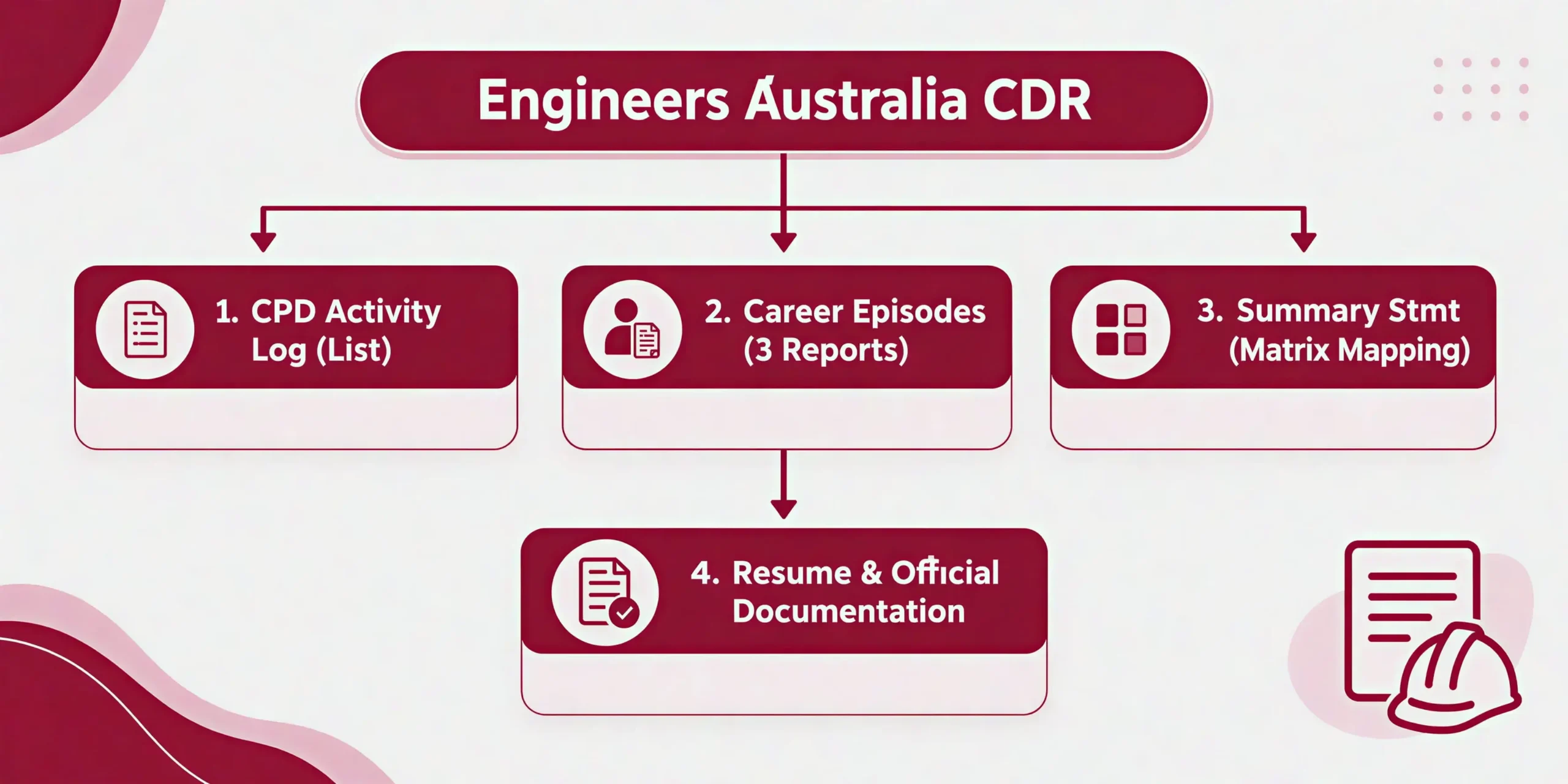
CDR sample covers
Key Rule: Every claim made in your Summary Statement must point directly to a numbered paragraph within one of your three Career Episodes. If an element isn’t described in an episode, it cannot be claimed in the Summary Statement.
CDR Career Episode Sample
A Career Episode is a narrative account of your engineering education or work experience. Each episode focuses on a specific engineering project or task and must be written entirely in English using your own words.
A typical Career Episode sample is divided into four distinct sections, with every paragraph strictly numbered using a standard decimal system (e.g., Episode 1 uses paragraphs 1.1, 1.2, 1.3; Episode 2 uses 2.1, 2.2, 2.3).
Sample Introduction Sample
The introduction provides contextual metadata about the episode. It is typically 100 words long and uses a standard format:
Sample Background Sample
The background sets the stage for your engineering activity, framing the project’s scope, objective, and your position within the organizational hierarchy. It ranges between 200 and 500 words:
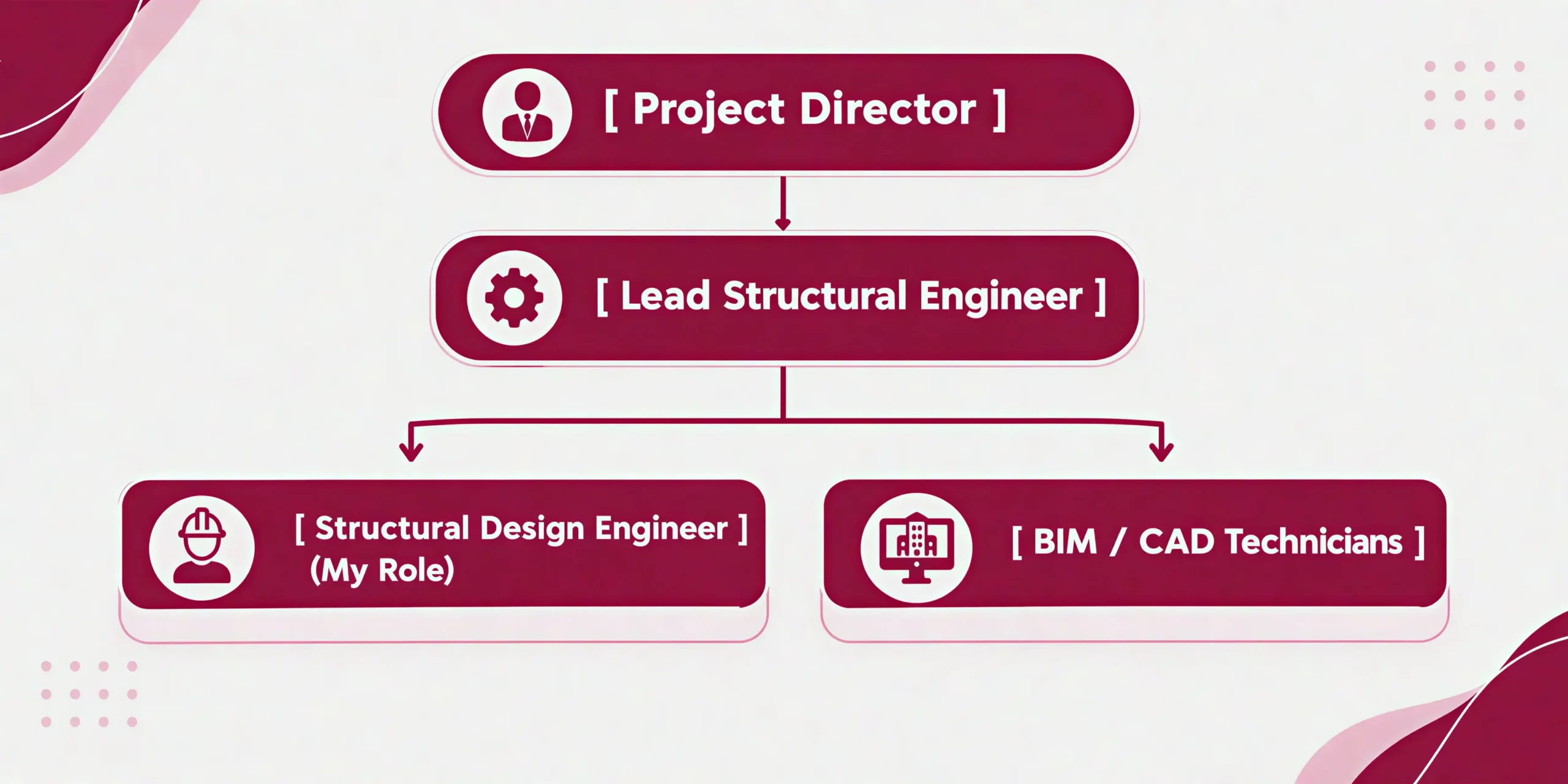
Project Director
Sample Personal Engineering Activity Sample
This is the core of the episode, spanning 500 to 1,000 words. It details the actual technical engineering work you performed. It must focus strictly on your individual actions using first-person language (“I calculated,” “I modeled,” “I resolved”) rather than group accomplishments.
Facing challenges mapping your project achievements to EA standards?
Reviewing a tailored draft can help align your structural narratives with competency guidelines. Request a consultation through professional CDR Writing Services to analyze your project scope before drafting.
CDR CPD Sample
Continuing Professional Development (CPD) demonstrates that you maintain currency in your engineering field after completing your primary qualification. Your CPD submission must be presented in a structured list format and should not exceed one A4 page.
A professional CPD sample includes a mix of formal education, industry seminars, technical workshops, research publications, and hands-on software training:
CDR Summary Statement Sample
The Summary Statement is the cross-referencing document where you demonstrate how your three Career Episodes fulfill EA’s specific competency units. You must complete one Summary Statement matching your target occupational category (Professional Engineer, Engineering Technologist, Engineering Associate, or Engineering Manager).
A Summary Statement sample maps each Competency Element to specific paragraph numbers across your three Career Episodes, accompanied by a brief summary statement explaining how that competency was demonstrated.
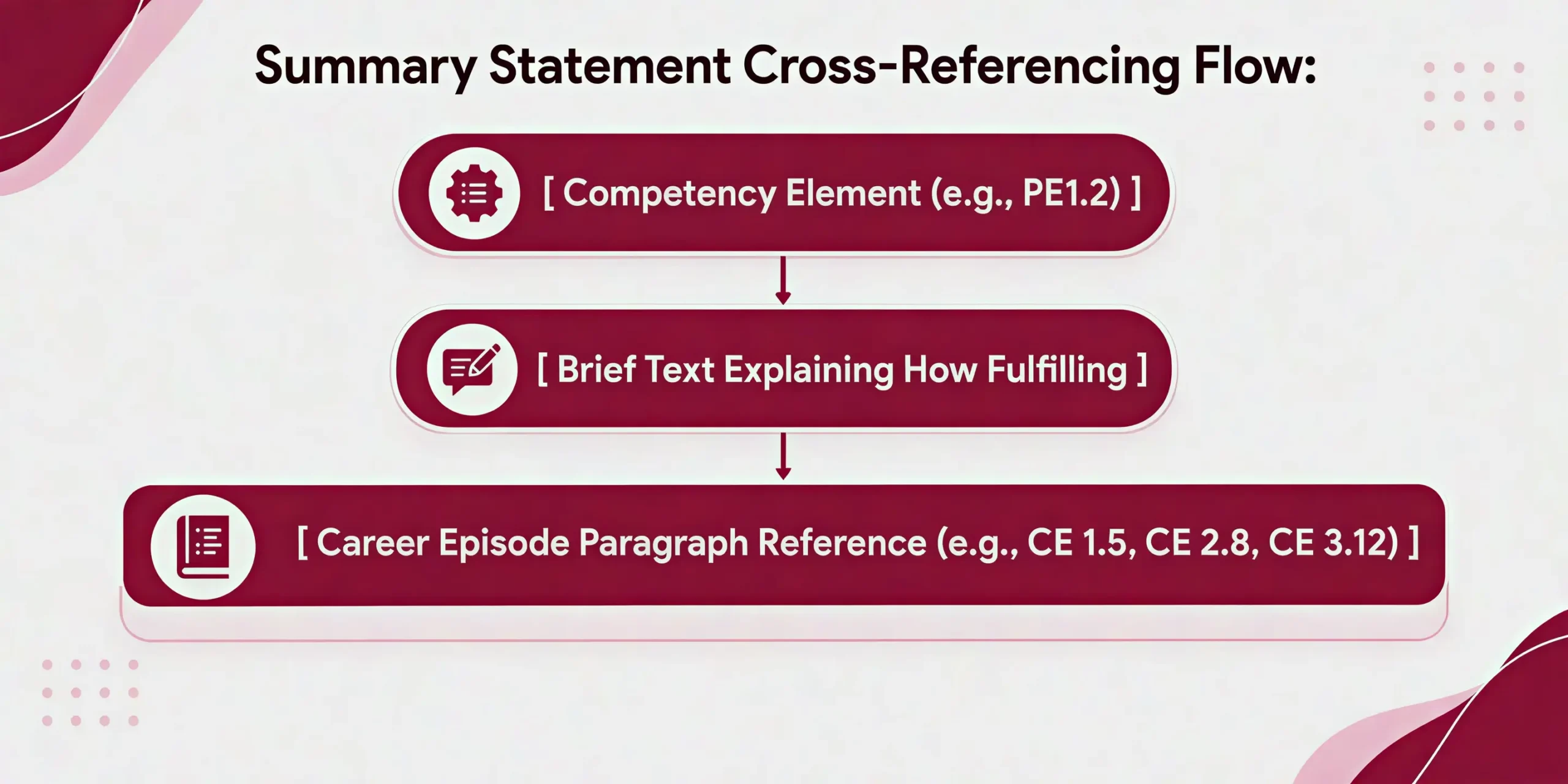
Here is an extract from a Summary Statement sample for a Professional Engineer:
CDR Report Sample vs CDR Template vs CDR Example
Applicants often confuse samples, templates, and examples. Understanding the distinction ensures you use these resources effectively without compromising your submission quality.
Confused about formatting or paragraph structure? Structuring a complex project into distinct, numbered paragraphs while keeping the focus on your personal contributions takes practice. You can review guidelines on writing an original CDR Career Episode to ensure your layout matches official EA standards.
How to Use a CDR Sample Without Copying
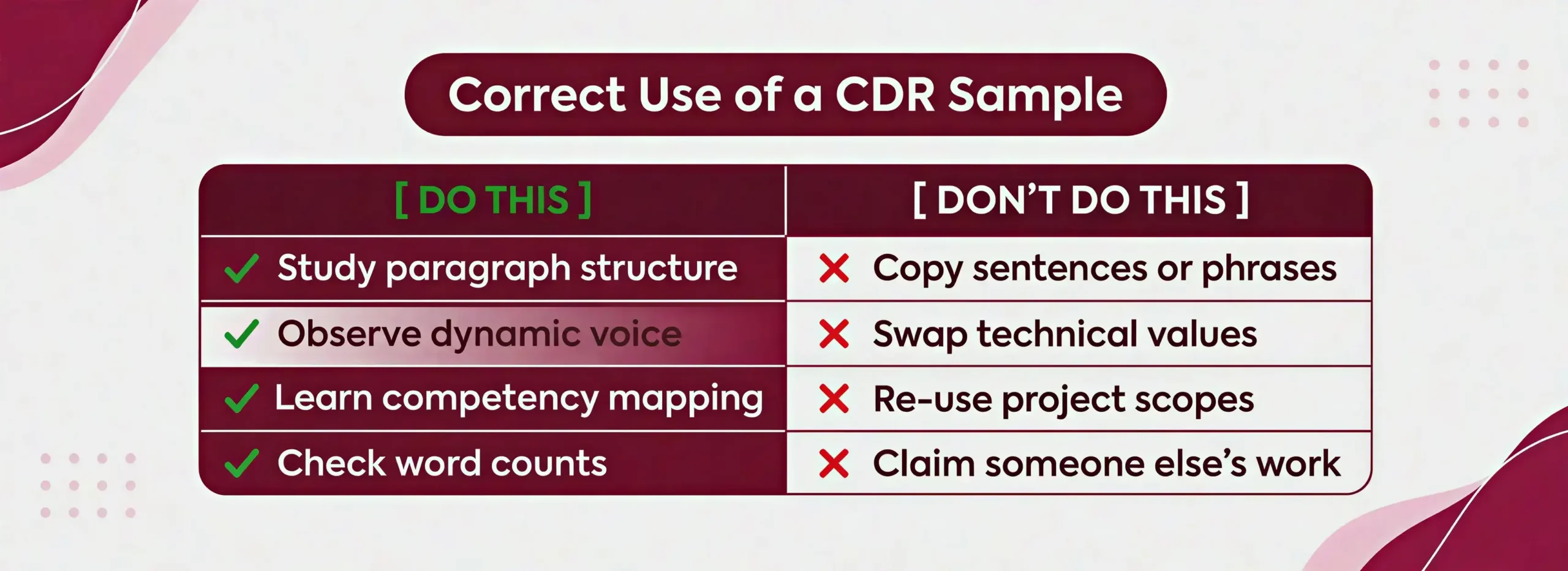
A CDR sample PDF is an analytical guide, not a template to be copied or paraphrased. Engineers Australia uses advanced plagiarism detection software, including cross-checking databases of previously submitted CDRs, academic papers, online repositories, and AI-generated text. Plagiarism leads to immediate rejection, notification to the Department of Home Affairs, and bans lasting 12 to 36 months.
Steps to Safely Analyze a Sample
- 1. Deconstruct the Structure: Look at how the sample allocates word count across the Introduction, Background, Personal Activity, and Summary sections.
- 2. Observe the Tone: Note how the narrative uses active, first-person phrasing (“I calculated,” “I analyzed,” “I managed”) rather than passive team phrasing (“We decided,” “The team built”).
- 3. Study the Mapping: Examine how technical tasks in the Personal Activity section correspond to specific codes listed in the Summary Statement table.
- 4. Close the Sample: Set the reference document aside completely before drafting your own original project content from your personal engineering records, logbooks, or design notes.
What Makes a Good CDR Sample?
Not all samples available online reflect high quality or compliance with current standards. Many samples circulated on public forums are outdated, incomplete, or rejected drafts containing significant formatting errors.
When evaluating a CDR report sample, look for these quality indicators:
- 100% First-Person Narrative: The narrative focuses on “I” rather than “We.” Statements like “We designed the foundation” do not allow assessors to evaluate your personal competence.
- Precise Paragraph Numbering: Every paragraph in the Career Episodes follows strict numbering (e.g., 1.1, 1.2, … 2.1, 2.2, … 3.1, 3.2), matching the exact references in the Summary Statement matrix.
- Engineering Depth: The narrative emphasizes technical problem-solving detailing formulas used, software tools applied, Australian standards referenced, and specific engineering decisions made rather than general project management or administrative summaries.
- Clear Outcomes: The report details quantifiable engineering results (e.g., “reduced material consumption by 12%,” “eliminated structural deflection by recalculating stiffness metrics”).
- Alignment with Current MSA Guidelines: Formatting strictly complies with the latest official Engineers Australia Migration Skills Assessment Booklet.
Common Mistakes When Using CDR Samples
Even applicants with strong technical backgrounds make critical errors when relying on sample materials. Avoid these common pitfalls:
- Copying Project Scopes: Using identical site conditions, calculations, software versions, or project dimensions from a sample. EA’s system flags structural and numerical similarities across submissions.
- Relying on Outdated Formats: EA updates its assessment criteria periodically. Using a sample written several years ago can lead to formatting issues or missing competency elements.
- Focusing on Team Achievements: Replicating a sample that uses excessive passive voice or “we” phrasing obscures your personal contributions.
- Paraphrasing Sample Text: Replacing words with synonyms while retaining the exact sentence structure of a sample still triggers plagiarism detection software.
- Misaligning Occupational Categories: Using a sample written for an Engineering Technologist when applying as a Professional Engineer. The required level of theoretical synthesis and design autonomy differs significantly between categories.
Unsure if your report contains structural flaws or accidental plagiarism? A comprehensive pre-submission review can highlight formatting gaps, missing competency elements, or inadvertent similarities to sample texts. Learn how a detailed CDR Competency Report evaluation helps verify your original draft against EA requirements.
How to Prepare Your Own CDR Report
Preparing an original, fully compliant CDR report involves a structured step-by-step workflow:
Foundation Step
Choose three projects from your academic studies or engineering career that demonstrate the broadest range of technical competencies for your target occupation category. Ensure you have access to project data, calculations, design logs, and reports.
Documentation
Gather records of all formal and informal engineering education completed after your primary degree. Format these activities into a single-page CPD table listing dates, titles, hours, locations, and topic areas.
Narrative Construction
Write three distinct Career Episodes using first-person active voice (“I designed,” “I evaluated”). Ensure every paragraph is strictly numbered (e.g., 1.1, 1.2, 1.3) and details your personal engineering contributions, technical problem-solving, and outcomes.
Competency Mapping
Select the correct Summary Statement matrix template for your occupational category. Map each required Competency Element to the relevant paragraph numbers across your three Career Episodes, summarizing how you demonstrated each capability.
Quality Assurance
Check your completed draft against the latest Engineers Australia MSA Booklet. Run comprehensive plagiarism checks to ensure 100% original text, verify all paragraph cross-references, and confirm technical formatting before final submission.
Frequently Asked Questions About CDR Samples
Where can I find a CDR sample?
Samples are often published by educational consultancies, engineering resource platforms, and migration guidance repositories. When reviewing samples, verify that they align with the latest Engineers Australia MSA Booklet guidelines and treat them purely as structural references.
What is included in a CDR report sample?
A complete report sample includes a Continuing Professional Development (CPD) table, three written Career Episodes detailing personal technical work, and a completed Summary Statement matrix mapping those episodes to EA competency units.
Can I copy a CDR sample?
No. Copying any part of a sample including text, project scopes, data tables, or sentence structures violates EA regulations. EA uses advanced plagiarism detection tools. Copied content can lead to application rejection and candidate bans ranging from 12 to 36 months.
Is a CDR sample PDF available for download online?
Yes, many websites provide downloadable sample PDFs across various disciplines (Civil, Mechanical, Electrical, Software, Chemical). However, use downloaded files strictly as reading references to understand document structure and tone.
How do I write a Career Episode?
Write each episode in English using the active, first-person voice (“I”). Focus on your individual actions, engineering calculations, software modeling, and technical problem-solving rather than team achievements. Divide the content into an Introduction, Background, Personal Engineering Activity, and Summary, numbering every paragraph sequentially.
What is a Summary Statement in a CDR?
The Summary Statement is a cross-referencing matrix table that bridges your narrative Career Episodes with EA’s competency units. It explicitly lists where and how you demonstrated each required competency across your written episodes.
How do I prepare a CPD for a CDR?
Format your CPD as a simple, single-page table. List relevant post-graduation learning activities in chronological order, including postgraduate studies, industry training workshops, conference attendance, technical literature reviews, and software certifications.
What should I look for in a good CDR example?
A strong example features clear first-person active phrasing, detailed technical problem-solving, proper paragraph numbering, logical structure, explicit links to engineering standards, and complete cross-referencing within the Summary Statement.
Ready to submit your Migration Skills Assessment with confidence?
Writing a CDR requires balancing technical precision, clear narrative structure, and accurate competency mapping. For personalized guidance on translating your experience into a fully compliant report, speak with a consultant at CDR Report Writers or explore our guide on Engineers Australia CDR Requirements.